How did you develop your marketing strategy?
Our very first idea was to get high-quality ground beef into restaurants in Albuquerque and Santa Fe. But we opened our business in January 2020, and then the pandemic hit and so we knew that was not going to work.
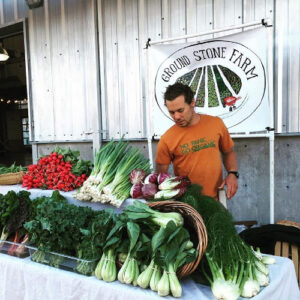
Our next marketing strategy was to basically sell our product anywhere we could. The first year, we were selling at five different farmers’ markets– two in Santa Fe, one in Eldorado, and two in Albuquerque. In addition to that, we attended every event we were invited to just trying to get our name and our product out there. It was successful in building a customer base, but it also burned out our team and our vehicles. So we scaled back to two or three markets a week, but started to add in other sales channels. We began rebuilding relationships with restaurants, joined the New Mexico Grown Approved Supplier Program to sell to institutions, and used the visibility we’d gained with customers to increase our online sales.
We’re doing a lot of different things, but we also have to take stock, check with the team and sometimes step back because we can’t do everything.
Overall I’d say the keys to our marketing success are:
- Being willing to evolve.
You have to constantly keep your eye on the horizon, think about what’s next, and stay attuned to what’s going on with markets locally and globally, because it’s going to affect your business. You have to be ready to make changes to your marketing strategy – either because something you’re doing isn’t working, or because there’s an opportunity to grow or pivot that makes sense for your business. It’s hard to stay constantly aware, but it’s essential. And sometimes, evolving means moving away from a market, either because it’s not profitable or because it’s making things too hard on the team. You’ve got to take care of your people first. Without them, it all means nothing.
- Making deep relationships.
We try to really connect with each person we sell to so they remember us and we become a regular part of feeding their family. This also means that if you’re going to sell at the farmers’ market, you’ve got to be there consistently. If you’re not there pretty much every week, customers will find something more consistent. It’s easier to buy all your food at Whole Foods, so we have to give them something Whole Foods can’t – a relationship and a story. If someone wants to come see the ranch, we invite them out. We’re educating people and telling them the story of the land and our family.
We don’t spend our time or resources on social media. Not that I’m opposed to it, but for us, we send out one email per week to the 6,000 people who have given us their information because we made a connection with them, and we get a lot of sales from that.
We also try to build deep relationships with our restaurant buyers. We want to sell to chefs who are really putting in the work to prioritize local food throughout the menu, not just have one local item to appease customers.
What are your risk management strategies?
1. Insurance
We hate to do it, but we have to sit down and think – “What are the worst things that can happen? and then figure out how to protect ourselves from it. We don’t like having to pay so much for insurance, but we have seen firsthand that it is worth it. So we insure everything– our livestock, our product, our vehicles, and our coolers. Even though you never want to think that someone is going to sue you, the consequences of that happening are so high– you don’t want to lose your house or your land because a consumer got sick. The consumer base can be volatile, and you’ve got to protect yourself against that.
We have been using FLIP Insurance and they’ve been really helpful. They know the business well and they’re really good at getting you coverage for what you actually need it for, and they cover everything from your truck to your commercial kitchen to your product. And it’s really fast to add additional insureds– like if you’re going to a new market, they can get you a certificate the same day.
2.Diversifying markets
The other part of our risk management strategy is diversifying our markets. For example, we started selling a lot to the Regional Farm to Food Bank Program, and when the federal funding for that got taken away, it had grown to be a big part of our income. But we had enough other outlets—and, thankfully, about four months to plan—to figure out how to keep moving our product.A lot of that is about building strong relationships– with consumers, with buyers, with the organizations that support farmers and ranchers. Those relationships mean everything to us. When we were starting, if a cooler went down, we’d lose $5,000 and have to face the reality of all that meat going to waste. When that happens, we have connections with other folks with coolers and with food pantries that can help make sure that whatever we can’t store gets on someone’s plate.
3.Financial planning
Another important risk management strategy is, when you’re starting your business, to have enough cushion to absorb losses in the first couple of years and still be able to keep going. It’s very hard for a new business to be profitable right away, so you have to plan for that both financially and emotionally, and know that you’re not failing or doing something wrong–it just takes some time to get everything into place.
What’s something you wish you had known sooner?
I started this business as a partnership with two other people who were friends of mine, but I didn’t do enough work to make sure that we all had the same level of commitment and investment that I did. It didn’t work out, and that had an impact on our friendship. So I guess I wish I had known how hard it is to be in business with other people. Not that it’s impossible to do well, but there is a lot of risk involved–both financially and personally.